
Written by the Doctobip Editorial Team. Educational information only — not medical advice. See our Medical Disclaimer.
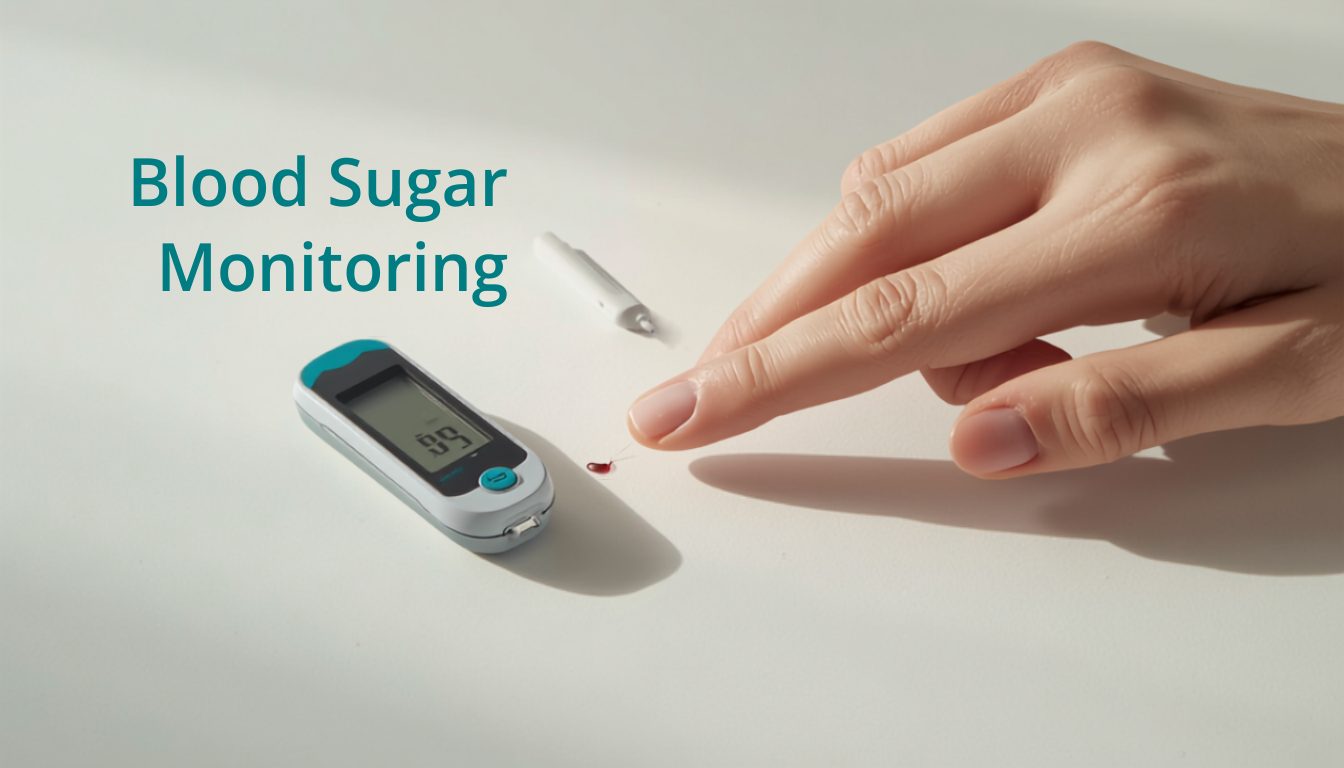
Blood sugar monitoring is how you turn diabetes from a guessing game into a manageable routine. But how often should you test, and when? The answer is personal — it depends on your treatment, your goals and how your body responds. This guide breaks down blood sugar monitoring into a simple, practical framework you can discuss with your care team.
Why blood sugar monitoring matters
A blood sugar reading is real-time feedback. It shows how food, activity, stress, sleep and medication affect you specifically — patterns no general rule can predict. Over time, consistent blood sugar monitoring reveals trends that your A1C average can hide, like a stubborn morning high or a post-lunch spike. Those insights are what let you adjust with confidence instead of guessing.
Two ways to check
- Fingerstick meter — a drop of blood on a test strip gives an instant reading. Accurate and affordable. See our guide to choosing a meter.
- Continuous glucose monitor (CGM) — a wearable sensor that reads glucose around the clock and shows trends and alarms. Learn more in our CGM guide.
Both approaches are valid; many people use a meter, a CGM, or a combination. For official guidance, the American Diabetes Association and the CDC both publish helpful monitoring resources.
What your numbers mean
A reading only helps if you know what to compare it to. General targets for many non-pregnant adults are roughly 80–130 mg/dL before meals and under 180 mg/dL after meals — but your personal goals may differ. Our guide to normal blood sugar levels breaks the ranges down, and your provider will set the targets that are right for you.
When to test — common timings
Your provider sets your schedule, but typical moments for blood sugar monitoring include:
- Fasting / first thing in the morning — your baseline
- Before meals — to guide food and (if used) insulin
- 1–2 hours after meals — to see how a meal affected you
- Before, during or after exercise — especially if you use insulin
- Before bed — to check you’re in a safe range overnight
- Before driving if you’re at risk of lows
- When you feel “off” — shaky, foggy, or very thirsty
How often to test
Frequency depends on your treatment:
- Diet/lifestyle-managed type 2: sometimes only occasional checks, or none — ask your provider
- Type 2 on pills: a few times a week to daily, depending on the medication
- On insulin: often before meals and bed, or continuously with a CGM
If you’re testing a lot but the numbers never change your decisions, ask your team whether you can test less — and vice versa.
Getting an accurate reading
- Wash and dry your hands — food residue (even a little fruit juice) can skew results
- Use a fresh lancet and in-date strips stored away from heat and humidity
- Use enough blood so the strip doesn’t under-fill
- Log the number with context (before/after meal, exercise) so patterns emerge
- Blood sugar monitoring shows how your body responds — pair it with your target ranges.
- Test around meals, activity, bedtime and whenever you feel off.
- Frequency depends on your treatment — your care team sets it.
- Clean hands + good technique = trustworthy numbers.
Frequently asked questions
Does blood sugar monitoring hurt?
A quick pinch at most. Using the sides of the fingertips, a fresh lancet and a shallow depth setting reduces discomfort considerably.
Do I need to test if I have a CGM?
Mostly no, but confirmation fingersticks are still advised in some situations — for example when symptoms don’t match the sensor. Your team will explain when.
What if my number is very high or very low?
Follow your care plan. Very low (below 70 mg/dL) needs fast-acting carbs now; very high with symptoms needs prompt attention.
Trusted resources
Medical disclaimer: This article is for general education and is not a substitute for professional medical advice. Your provider sets your monitoring plan.