
Written by the Doctobip Editorial Team. Educational information only — not medical advice. See our Medical Disclaimer.
This complete guide to normal blood sugar level gives you clear, practical answers, the essentials worth knowing, and the questions people ask most. Everything is explained in plain, everyday language, so you can understand what matters and act on it today with real confidence.
Understanding blood sugar (blood glucose) numbers is one of the most useful skills for anyone managing — or trying to prevent — diabetes. This guide explains what the numbers mean, the ranges commonly used by health authorities, and when to talk to a doctor.
What is blood sugar?
Blood sugar is the amount of glucose in your blood. Glucose comes mainly from the food you eat and is your body’s main source of energy. Insulin helps move glucose from the blood into your cells. When this system is balanced, blood sugar stays within a healthy range.
Normal blood sugar ranges
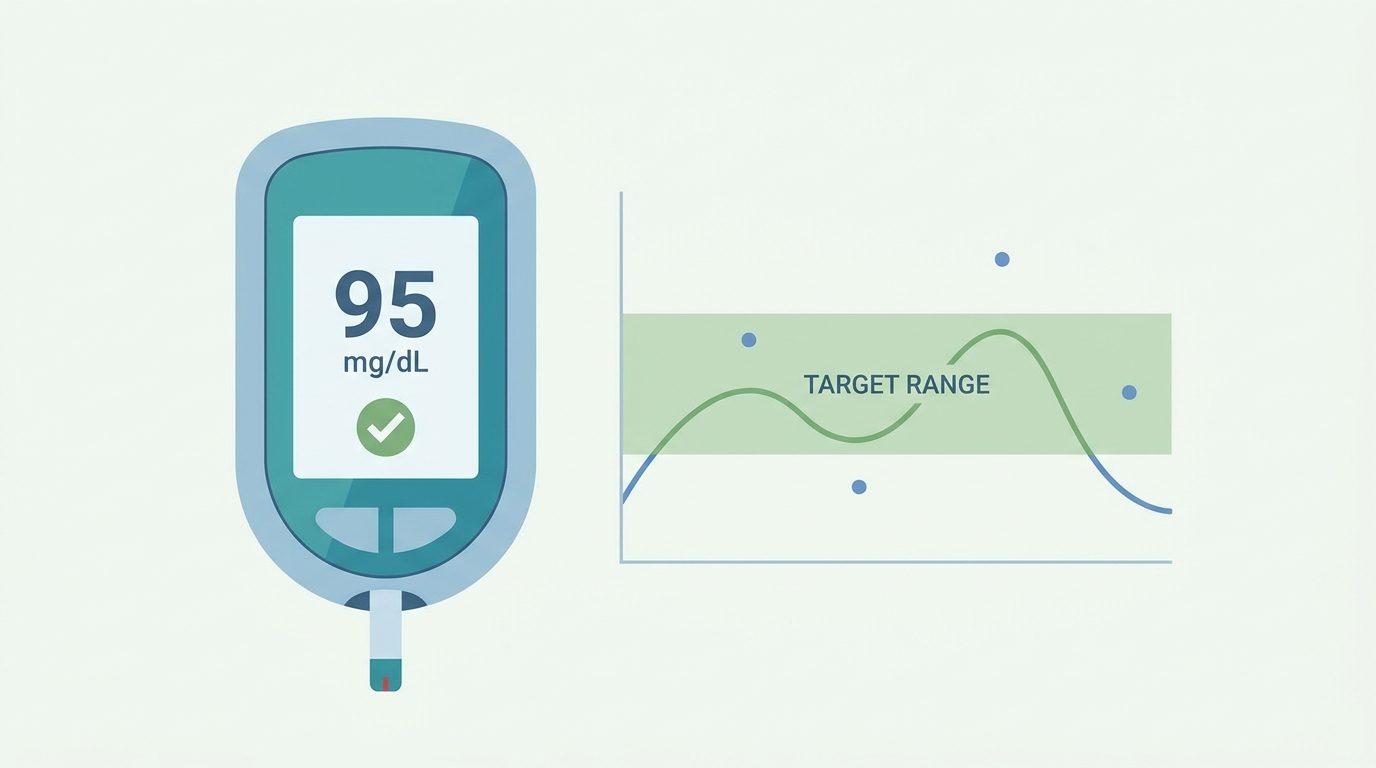
The following ranges are widely used by the American Diabetes Association (ADA) for non-pregnant adults. Your personal targets may differ, so always confirm with your healthcare provider.
Fasting (no food for at least 8 hours)
- Normal: 70–99 mg/dL
- Prediabetes: 100–125 mg/dL
- Diabetes: 126 mg/dL or higher (confirmed on two tests)
Two hours after a meal
- Normal: below 140 mg/dL
- Prediabetes: 140–199 mg/dL
- Diabetes: 200 mg/dL or higher
A1C (average over ~3 months)
- Normal: below 5.7%
- Prediabetes: 5.7–6.4%
- Diabetes: 6.5% or higher
- Fasting normal is roughly 70–99 mg/dL; A1C normal is below 5.7%.
- Numbers between “normal” and “diabetes” indicate prediabetes — a signal to act early.
- Targets are individual; your doctor sets what’s right for you.
Common targets for people with diabetes
For many non-pregnant adults with diabetes, the ADA suggests general targets such as an A1C below 7%, before-meal glucose of 80–130 mg/dL, and after-meal glucose below 180 mg/dL. These are starting points — your provider may set different goals based on your health.
What affects blood sugar?
- Food, especially carbohydrates
- Physical activity
- Medication and insulin
- Stress, illness, and sleep
- Hydration and certain medications
To learn how to track your numbers, see our section on blood sugar monitoring.
When to see a doctor
Talk to a healthcare provider if your readings are outside the normal range, if you have symptoms of high or low blood sugar, or if you’re unsure how to interpret your numbers. Seek urgent care for very high readings with symptoms, or for severe low blood sugar.
Frequently asked questions
What is a dangerous blood sugar level?
Very high (for example, above 240 mg/dL with symptoms) or very low (below 70 mg/dL) levels can be dangerous. Follow your care plan and seek medical help when needed.
Does one high reading mean I have diabetes?
No. Diagnosis is based on repeated testing and clinical judgment. A single reading can be affected by food, stress, or illness.
How often should I check?
It depends on your treatment. Your provider will advise how often to test.
References
- American Diabetes Association (ADA) — diabetes.org
- Centers for Disease Control and Prevention (CDC) — cdc.gov/diabetes
- National Institute of Diabetes and Digestive and Kidney Diseases (NIDDK) — niddk.nih.gov
Putting normal blood sugar level into practice
The real value of normal blood sugar level comes from steady, day-to-day consistency. Keep normal blood sugar level simple: learn the essentials first, then build a routine that genuinely fits your life. If you ever feel stuck with normal blood sugar level, small adjustments usually beat big changes — and your care team can tailor normal blood sugar level to your personal needs.
Normal Blood Sugar Level: The Bottom Line
The best outcomes rarely come from dramatic overhauls — they come from small, consistent habits you can actually keep. Start by understanding what your key numbers mean, then agree on realistic targets that fit your daily life together with your care team. Keep a simple record of what you eat, how you move and how you feel, so patterns become clear and you can repeat what works. Prepare for the tricky moments in advance, and give yourself credit for steady progress rather than perfection. Above all, if something feels off or you are unsure, do not guess — reach out to a qualified healthcare professional. With reliable information and a routine that suits you, staying in control becomes far more manageable.
Helpful links
Medical disclaimer: This article is for general education and is not a substitute for professional medical advice. Ranges are general and may not apply to you. Always consult a qualified healthcare provider. A qualified medical reviewer should be credited before this content is relied upon.