
Written by the Doctobip Editorial Team. Educational information only — not medical advice. See our Medical Disclaimer.
This complete guide to insulin basics gives you clear, practical answers, the essentials worth knowing, and the questions people ask most. Everything is explained in plain, everyday language, so you can understand what matters and act on it today with real confidence.
Insulin can feel intimidating at first — a hormone, several types, different timings. But the core ideas are simple. Whether you’re newly using insulin or supporting someone who is, here’s a clear, friendly primer.
What insulin does
Insulin is the hormone that lets glucose move from your blood into your cells for energy. In type 1 diabetes, the body makes little or none, so insulin is essential. In type 2, the body makes insulin but uses it poorly; some people eventually need insulin too. Taking insulin is not a failure — it’s a tool.
The main types of insulin
Insulins are grouped by how fast they start working and how long they last:
- Rapid-acting — starts in minutes, taken around meals to cover food
- Short-acting (regular) — a bit slower than rapid
- Intermediate-acting — covers part of a day
- Long-acting / ultra-long — provides a steady “background” level for 24 hours or more
Many people use a combination: a long-acting “basal” insulin for background needs, plus rapid-acting “bolus” doses at meals. Your care team tailors this to you.
How insulin is taken
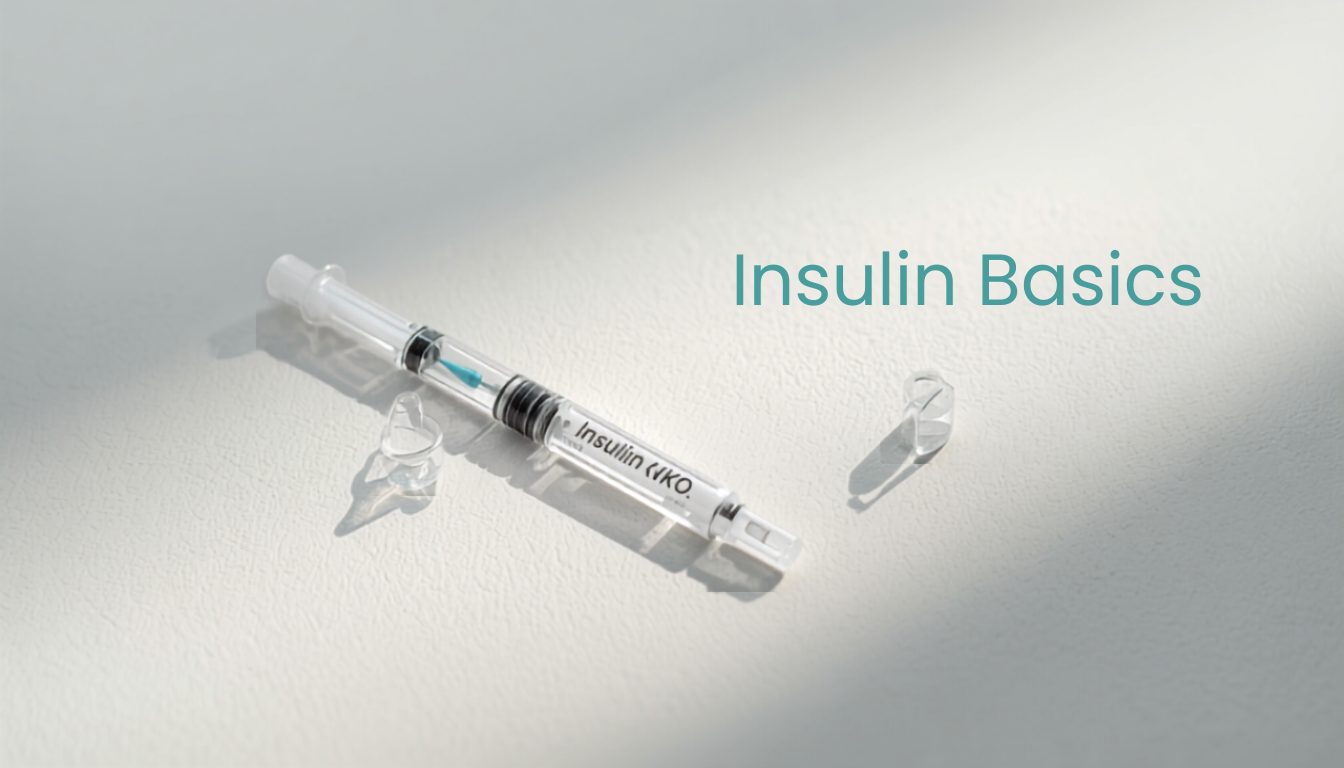
- Pens and syringes — simple, portable injections into the fatty layer under the skin (belly, thigh, arm)
- Insulin pumps — a small device delivering insulin continuously, with mealtime doses at the push of a button
- Automated systems — modern pumps paired with a CGM can adjust background insulin automatically, easing daily management
Rotate injection sites to avoid lumps (lipohypertrophy) that affect absorption.
Storing insulin
Unopened insulin lives in the fridge; the pen or vial you’re using is usually kept at room temperature for a set number of days (check the label). Never freeze insulin or leave it in a hot car — heat and cold both damage it. This matters especially when traveling.
The main thing to watch: low blood sugar
Insulin’s job is to lower glucose, so the key risk is going too low. Know the signs of a hypo, carry fast-acting carbs, and never skip meals after a mealtime dose without a plan. Timing insulin with food and activity is a skill your care team will help you build.
- Insulin moves glucose into cells; it’s essential in type 1 and used by some in type 2.
- Types differ by speed and duration — often basal + mealtime combos.
- Rotate injection sites; store insulin away from heat and freezing.
- Watch for lows — carry fast-acting carbs and know the signs.
Frequently asked questions
Does needing insulin mean my diabetes is worse?
Not necessarily. In type 1 it’s essential from the start; in type 2 needs change over time. Insulin is a normal, effective tool.
Do insulin injections hurt?
Modern needles are very fine and short; most people feel little. Good technique and site rotation help.
Can insulin be taken as a pill?
Standard insulin is injected because stomach acid would break down an oral version. Research into other delivery methods continues.
References
- American Diabetes Association — Insulin Basics
- NIDDK — Insulin, Medicines, & Other Diabetes Treatments
- CDC — cdc.gov/diabetes
Putting insulin basics into practice
The real value of insulin basics comes from steady, day-to-day consistency. Keep insulin basics simple: learn the essentials first, then build a routine that genuinely fits your life. If you ever feel stuck with insulin basics, small adjustments usually beat big changes — and your care team can tailor insulin basics to your personal needs.
Insulin Basics: The Bottom Line
The best outcomes rarely come from dramatic overhauls — they come from small, consistent habits you can actually keep. Start by understanding what your key numbers mean, then agree on realistic targets that fit your daily life together with your care team. Keep a simple record of what you eat, how you move and how you feel, so patterns become clear and you can repeat what works. Prepare for the tricky moments in advance, and give yourself credit for steady progress rather than perfection. Above all, if something feels off or you are unsure, do not guess — reach out to a qualified healthcare professional. With reliable information and a routine that suits you, staying in control becomes far more manageable.
Helpful links
Medical disclaimer: This article is for general education and is not a substitute for professional medical advice. Never change insulin doses without your healthcare team.