Written by the Doctobip Editorial Team. Educational information only — not medical advice. See our Medical Disclaimer.
This complete guide to glycemic index gives you clear, practical answers, the essentials worth knowing, and the questions people ask most. Everything is explained in plain, everyday language, so you can understand what matters and act on it today with real confidence.
The glycemic index (GI) is a handy tool for understanding how different foods affect your blood sugar. It’s not the whole story of healthy eating — but once you grasp it, you can make smarter swaps that keep your numbers steadier through the day.
What is the glycemic index?
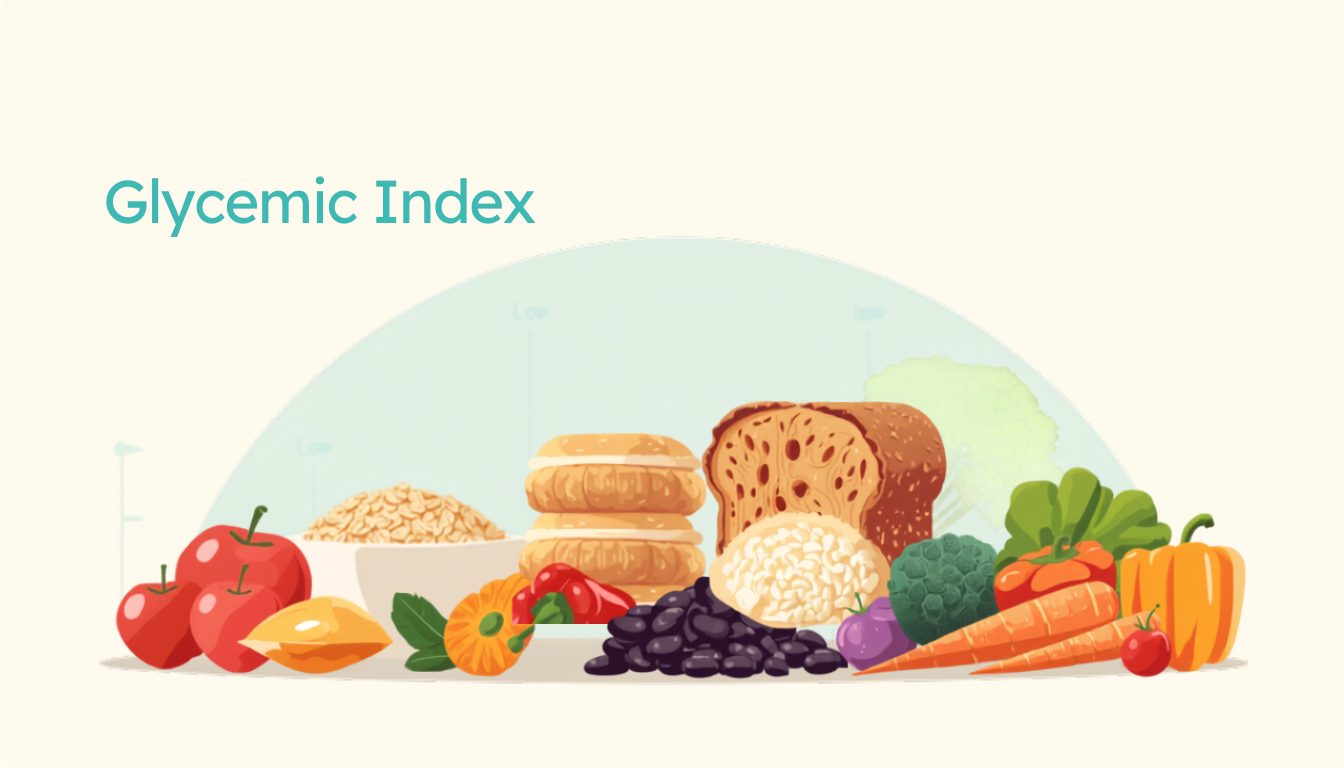
The GI ranks carbohydrate foods from 0 to 100 based on how quickly they raise blood glucose compared with pure sugar. The faster and higher the spike, the higher the GI.
- Low GI (55 or less): most non-starchy vegetables, beans and lentils, most whole fruits, oats, whole grains
- Medium GI (56–69): whole-wheat products, brown rice, some tropical fruit
- High GI (70+): white bread, white rice, potatoes, sugary drinks, many breakfast cereals
Why low-GI foods help
Low-GI foods are digested more slowly, so glucose enters the blood gradually instead of in a rush. That means gentler rises, fewer crashes, and often better fullness — all helpful for managing blood sugar and weight.
The catch: glycemic LOAD
GI only tells you how fast, not how much. Glycemic load (GL) accounts for portion size too. Watermelon has a high GI but so few carbs per serving that its impact is small. The practical lesson: consider both the type and the amount of carbohydrate.
Simple ways to lower a meal’s impact
- Pair carbs with protein, fat or fiber — they slow digestion (e.g., apple + peanut butter)
- Choose whole over refined — steel-cut oats over instant, whole fruit over juice
- Don’t overcook starches — al dente pasta has a lower GI than soft
- Add vinegar or lemon — acidity can blunt the rise slightly
- Eat vegetables first — starting a meal with veg and protein can reduce the post-meal spike
These pair well with the plate method and our best foods guide.
- GI ranks how fast carbs raise blood sugar; low-GI = steadier.
- Portion matters too — think glycemic load, not just index.
- Pairing carbs with protein/fat/fiber lowers the spike.
- A CGM is a great way to learn how foods affect you.
Frequently asked questions
Do I need to memorize GI values?
No. Learn the general pattern (whole and fiber-rich = lower) and a few personal staples. Testing or a CGM shows your real responses.
Are all high-GI foods “bad”?
No food is off-limits. High-GI foods can fit in smaller portions or paired with protein/fat — it’s about the overall pattern.
Is low-GI the same as low-carb?
No. Low-GI is about carb quality and speed; low-carb is about carb quantity. They can overlap but aren’t identical.
References
- American Diabetes Association — Glycemic Index and Diabetes
- CDC — cdc.gov/diabetes
- NIDDK — niddk.nih.gov
Glycemic Index: The Bottom Line
The best outcomes rarely come from dramatic overhauls — they come from small, consistent habits you can actually keep. Start by understanding what your key numbers mean, then agree on realistic targets that fit your daily life together with your care team. Keep a simple record of what you eat, how you move and how you feel, so patterns become clear and you can repeat what works. Prepare for the tricky moments in advance, and give yourself credit for steady progress rather than perfection. Above all, if something feels off or you are unsure, do not guess — reach out to a qualified healthcare professional. With reliable information and a routine that suits you, staying in control becomes far more manageable.
Helpful links
Medical disclaimer: This article is for general education and is not a substitute for professional medical or dietary advice.