
Written by the Doctobip Editorial Team. Educational information only — not medical advice. See our Medical Disclaimer.
This complete guide to diabetes meal planning gives you clear, practical answers, the essentials worth knowing, and the questions people ask most. Everything is explained in plain, everyday language, so you can understand what matters and act on it today with real confidence.
Meal planning with diabetes doesn’t have to mean rigid menus or complicated math. A few reliable principles — repeated week after week — beat any “perfect” plan you can’t sustain. Here’s a simple framework you can start using today.
Start with the plate, not the calculator
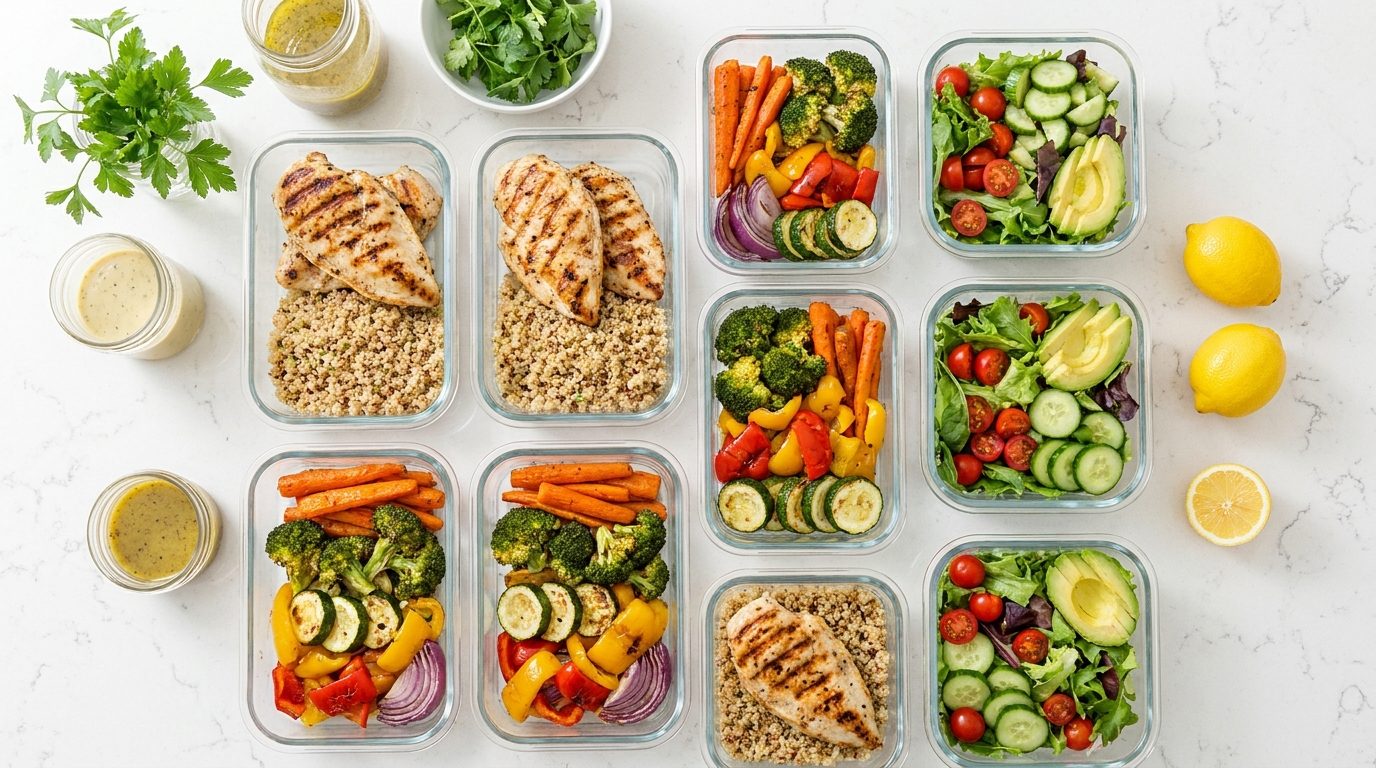
The easiest method endorsed by the ADA: the Diabetes Plate. Take a 9-inch plate and fill:
- ½ with non-starchy vegetables — salad, broccoli, peppers, zucchini, green beans
- ¼ with lean protein — chicken, fish, eggs, tofu, beans
- ¼ with quality carbohydrates — whole grains, starchy veg, fruit, or milk/yogurt
Add water or another zero-calorie drink, and you have a blood-sugar-friendly meal with zero weighing. Our best foods guide covers what to put in each quarter.
Understand carbohydrates (the 3-sentence version)
Carbs raise blood sugar more than protein or fat. Quality matters: fiber-rich carbs (whole grains, beans, fruit) digest slowly; refined carbs and sugary drinks hit fast. Consistency matters too — spreading carbs relatively evenly across meals avoids big spikes and dips.
A simple weekly routine
- Pick 2–3 breakfasts you rotate — e.g., Greek yogurt with berries and nuts; eggs with whole-grain toast; overnight oats
- Build lunches on the plate method — big salad + protein + a fiber carb
- Plan 4–5 dinners, cook once, eat twice — doubling recipes halves your cooking
- Prep smart snacks so the vending machine doesn’t decide for you
- Shop from a list built around these meals — the aisles with packaged snacks get skipped naturally
Timing tips that help
- Try not to skip meals — especially if you take insulin or sulfonylureas (risk of lows)
- A 10-minute walk after meals measurably blunts the post-meal rise
- Watch portions at dinner if your morning numbers run high — and mention patterns to your care team
- Half vegetables, quarter protein, quarter carbs — no math required.
- Choose fiber-rich carbs, spread them across the day.
- Rotate a small set of go-to meals; repetition is your friend.
- Sustainable beats perfect, every time.
Frequently asked questions
Do I need to count carbs?
Not everyone does. People on mealtime insulin often count carbs to dose correctly; many others do well with the plate method. Ask your care team what fits your treatment.
Is breakfast mandatory?
Not universally — but if your medication expects meals, don’t skip. Personalize with your provider or a dietitian.
Can I eat rice, pasta or potatoes?
Yes, in portioned amounts — prefer whole-grain versions, and pair with vegetables and protein to slow the rise.
References
- American Diabetes Association — Diabetes Plate Method
- CDC — cdc.gov/diabetes: Meal Planning
- NIDDK — niddk.nih.gov
Putting diabetes meal planning into practice
The real value of diabetes meal planning comes from steady, day-to-day consistency. Keep diabetes meal planning simple: learn the essentials first, then build a routine that genuinely fits your life. If you ever feel stuck with diabetes meal planning, small adjustments usually beat big changes — and your care team can tailor diabetes meal planning to your personal needs.
Diabetes Meal Planning: The Bottom Line
The best outcomes rarely come from dramatic overhauls — they come from small, consistent habits you can actually keep. Start by understanding what your key numbers mean, then agree on realistic targets that fit your daily life together with your care team. Keep a simple record of what you eat, how you move and how you feel, so patterns become clear and you can repeat what works. Prepare for the tricky moments in advance, and give yourself credit for steady progress rather than perfection. Above all, if something feels off or you are unsure, do not guess — reach out to a qualified healthcare professional. With reliable information and a routine that suits you, staying in control becomes far more manageable.
Helpful links
Medical disclaimer: This article is for general education and is not a substitute for professional medical or dietary advice. A registered dietitian can personalize your plan.