
Written by the Doctobip Editorial Team. Educational information only — not medical advice. See our Medical Disclaimer.
This complete guide to best foods for diabetes gives you clear, practical answers, the essentials worth knowing, and the questions people ask most. Everything is explained in plain, everyday language, so you can understand what matters and act on it today with real confidence.
No single food cures or causes diabetes — but day after day, what’s on your plate is one of the strongest levers you have over blood sugar. Here’s a practical, no-nonsense look at the foods worth building meals around, and the ones worth limiting.
The plate method: a simple starting point
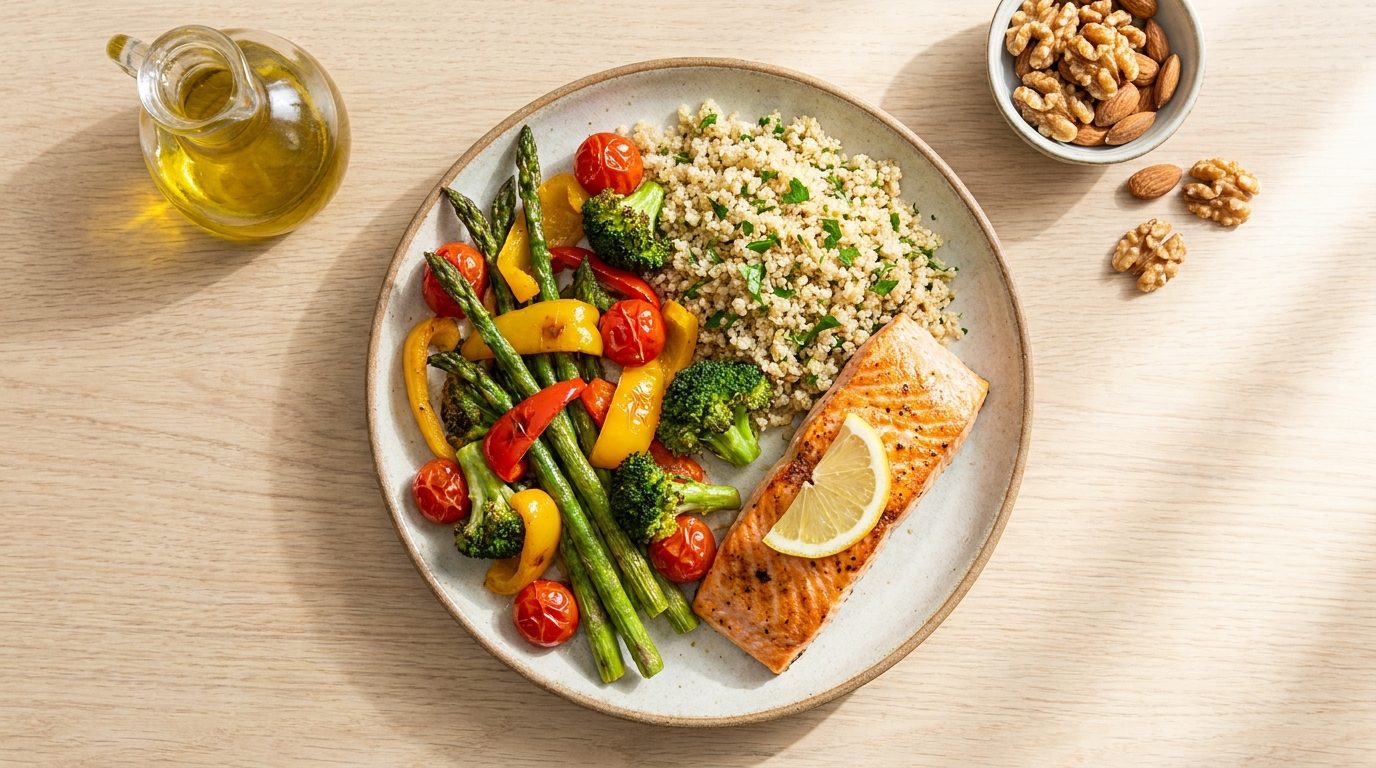
Health authorities like the ADA recommend a simple visual: fill half your plate with non-starchy vegetables, a quarter with lean protein, and a quarter with quality carbohydrates. No weighing, no apps required.
Foods to build meals around
Non-starchy vegetables
Leafy greens, broccoli, cauliflower, peppers, zucchini, green beans, tomatoes. High in fiber and nutrients, low impact on blood sugar — eat generously.
Quality carbohydrates
Whole grains (oats, quinoa, brown rice, whole-grain bread), beans and lentils, and whole fruit. Fiber slows digestion, which smooths out blood sugar rises. Portion size still matters.
Lean proteins
Fish (especially fatty fish like salmon, rich in omega-3s), poultry, eggs, tofu, beans, low-fat dairy and Greek yogurt. Protein helps you stay full and doesn’t raise blood sugar directly.
Healthy fats
Olive oil, nuts, seeds, avocado. They support heart health — important because diabetes raises cardiovascular risk.
Foods to limit
- Sugary drinks — soda, sweet tea, fruit juice: the fastest way to spike blood sugar
- Refined carbs — white bread, white rice, many breakfast cereals, pastries
- Highly processed snacks and fast food — often combine refined carbs, unhealthy fats and sodium
- Alcohol in excess — can cause both highs and dangerous lows, especially with insulin or certain medications
A note on “diabetic” products and sweeteners
Foods marketed as “diabetic-friendly” or “sugar-free” aren’t automatically healthy — check the full ingredient list and carb count. Non-nutritive sweeteners can help reduce sugar intake, but water remains the best everyday drink.
- Half vegetables, quarter protein, quarter quality carbs — the plate method works.
- Fiber is your friend: whole grains, beans, vegetables, whole fruit.
- Sugary drinks and refined carbs are the first things to cut.
- Consistency beats perfection — sustainable habits move your A1C.
Frequently asked questions
Can I ever eat sweets?
Small portions, planned into a meal, work for many people. “Never” is rarely sustainable — talk to your care team or a dietitian about what fits your plan.
Is fruit too sugary?
Whole fruit (with its fiber) is fine for most people in sensible portions. Juice is the one to limit.
Do I need a special diet?
Mediterranean-style, DASH, and other balanced patterns all work. The best diet is a healthy one you can actually maintain.
References
- American Diabetes Association — diabetes.org/food-nutrition
- CDC — cdc.gov/diabetes/managing/eat-well
- NIDDK — niddk.nih.gov
Putting the best foods for diabetes into practice
The real value of the best foods for diabetes comes from steady, day-to-day consistency. Keep the best foods for diabetes simple: learn the essentials first, then build a routine that genuinely fits your life. If you ever feel stuck with the best foods for diabetes, small adjustments usually beat big changes — and your care team can tailor the best foods for diabetes to your personal needs.
Best Foods for Diabetes: The Bottom Line
The best outcomes rarely come from dramatic overhauls — they come from small, consistent habits you can actually keep. Start by understanding what your key numbers mean, then agree on realistic targets that fit your daily life together with your care team. Keep a simple record of what you eat, how you move and how you feel, so patterns become clear and you can repeat what works. Prepare for the tricky moments in advance, and give yourself credit for steady progress rather than perfection. Above all, if something feels off or you are unsure, do not guess — reach out to a qualified healthcare professional. With reliable information and a routine that suits you, staying in control becomes far more manageable.
Helpful links
Medical disclaimer: This article is for general education and is not a substitute for professional medical or dietary advice. Always consult a qualified healthcare provider.