
Written by the Doctobip Editorial Team. Educational information only — not medical advice. See our Medical Disclaimer.
This complete guide to type 1 vs type 2 diabetes gives you clear, practical answers, the essentials worth knowing, and the questions people ask most. Everything is explained in plain, everyday language, so you can understand what matters and act on it today with real confidence.
Type 1 and type 2 diabetes share a name and a symptom — high blood sugar — but they are different conditions with different causes and treatments. Understanding the difference helps you make sense of diagnoses, treatments and headlines.
The core difference
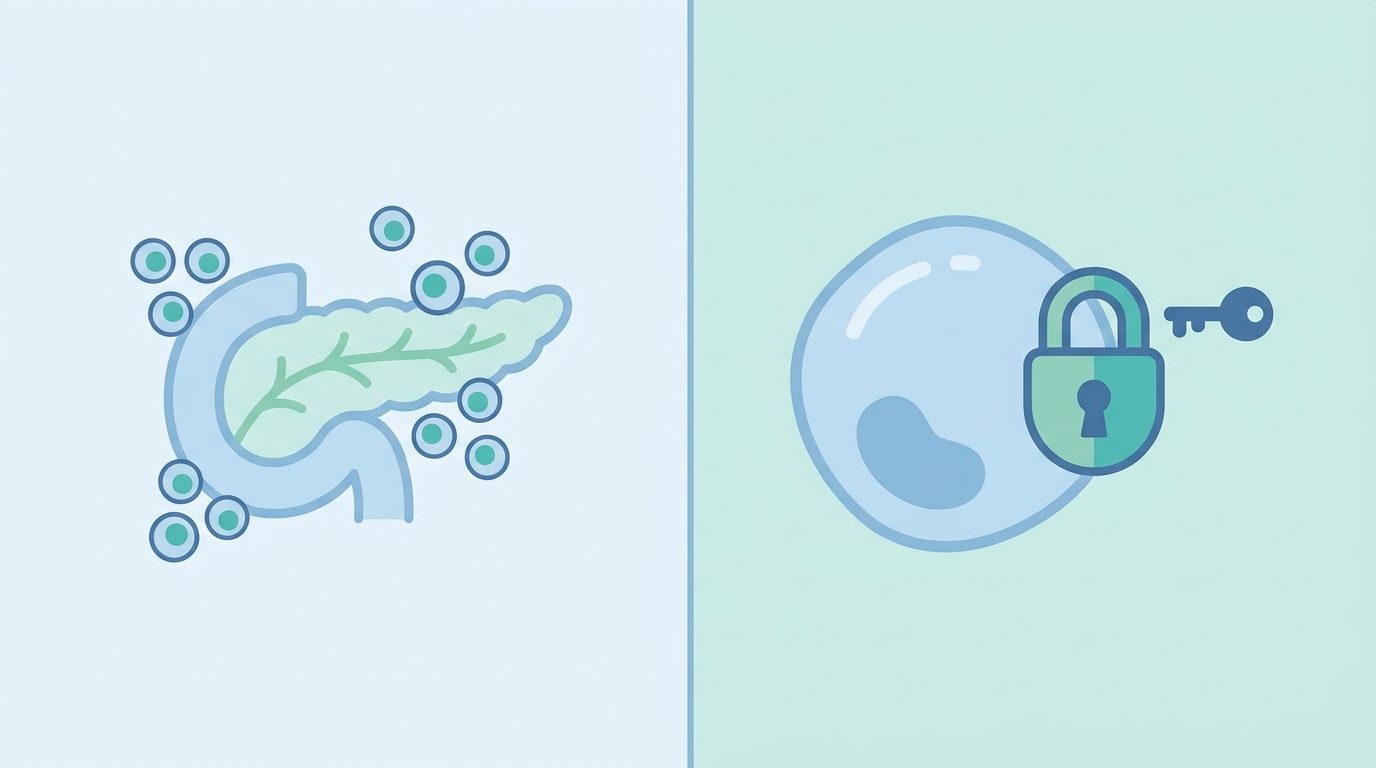
Type 1 diabetes is an autoimmune condition: the immune system attacks the insulin-producing cells of the pancreas. The body makes little or no insulin, so people with type 1 need insulin every day to live.
Type 2 diabetes is primarily a problem of insulin resistance: the body still makes insulin (at least at first), but doesn’t use it effectively. It develops gradually and is strongly linked to genetics, weight, and lifestyle. Read our full guide to type 2 diabetes.
Side-by-side comparison
| Type 1 | Type 2 | |
|---|---|---|
| Cause | Autoimmune — insulin-producing cells destroyed | Insulin resistance ± reduced insulin over time |
| Typical onset | Often childhood or young adulthood (can be any age) | Usually adulthood (increasingly seen younger) |
| Speed of onset | Often rapid, over weeks | Gradual, over years — often silent |
| Share of cases | Roughly 5–10% | Roughly 90–95% |
| Insulin required? | Yes, always | Sometimes — many manage with lifestyle and other medications first |
| Prevention | Not currently preventable | Often delayed or prevented with lifestyle changes |
Symptoms overlap
Both types can cause increased thirst, frequent urination, fatigue, blurred vision and unexplained weight loss. In type 1 these tend to appear quickly and more severely; in type 2 they can be mild or absent for years.
How each is treated
- Type 1: insulin (injections or pump), carbohydrate counting, blood sugar monitoring — often with a continuous glucose monitor (CGM).
- Type 2: healthy eating, physical activity and weight management first; medications (like metformin) when needed; insulin in some cases; monitoring as advised.
- Type 1 = autoimmune, insulin always required. Type 2 = insulin resistance, often lifestyle-responsive.
- Type 2 accounts for the vast majority of diabetes cases.
- Both require taking blood sugar seriously — but the day-to-day management differs.
Frequently asked questions
Can type 2 turn into type 1?
No. They are different conditions. However, some people with type 2 eventually need insulin — that doesn’t make it type 1.
Can adults get type 1?
Yes. Type 1 can appear at any age; adult-onset forms (like LADA) are sometimes initially mistaken for type 2.
Which one is “worse”?
Neither is “better” — both can lead to serious complications if unmanaged, and both can be managed well with the right care.
References
- American Diabetes Association (ADA) — diabetes.org
- CDC — cdc.gov/diabetes
- NIDDK — niddk.nih.gov
Putting type 1 vs type 2 diabetes into practice
The real value of type 1 vs type 2 diabetes comes from steady, day-to-day consistency. Keep type 1 vs type 2 diabetes simple: learn the essentials first, then build a routine that genuinely fits your life. If you ever feel stuck with type 1 vs type 2 diabetes, small adjustments usually beat big changes — and your care team can tailor type 1 vs type 2 diabetes to your personal needs.
Type 1 vs Type 2 Diabetes: The Bottom Line
The best outcomes rarely come from dramatic overhauls — they come from small, consistent habits you can actually keep. Start by understanding what your key numbers mean, then agree on realistic targets that fit your daily life together with your care team. Keep a simple record of what you eat, how you move and how you feel, so patterns become clear and you can repeat what works. Prepare for the tricky moments in advance, and give yourself credit for steady progress rather than perfection. Above all, if something feels off or you are unsure, do not guess — reach out to a qualified healthcare professional. With reliable information and a routine that suits you, staying in control becomes far more manageable.
Helpful links
Medical disclaimer: This article is for general education and is not a substitute for professional medical advice. Always consult a qualified healthcare provider.