
Written by the Doctobip Editorial Team. Educational information only — not medical advice. See our Medical Disclaimer.
This complete guide to diabetic snacks gives you clear, practical answers, the essentials worth knowing, and the questions people ask most. Everything is explained in plain, everyday language, so you can understand what matters and act on it today with real confidence.
Snacking with diabetes isn’t forbidden — it’s strategic. The right snack keeps you satisfied without spiking blood sugar; the wrong one starts a rollercoaster. The formula is simple: pair fiber or protein with any carbohydrate, and keep portions honest.
The snack formula
Aim for snacks around 15–20 grams of carbs or less, combined with protein or healthy fat to slow digestion. Protein + fiber = fuller for longer, flatter glucose curve.
Smart snacks to reach for
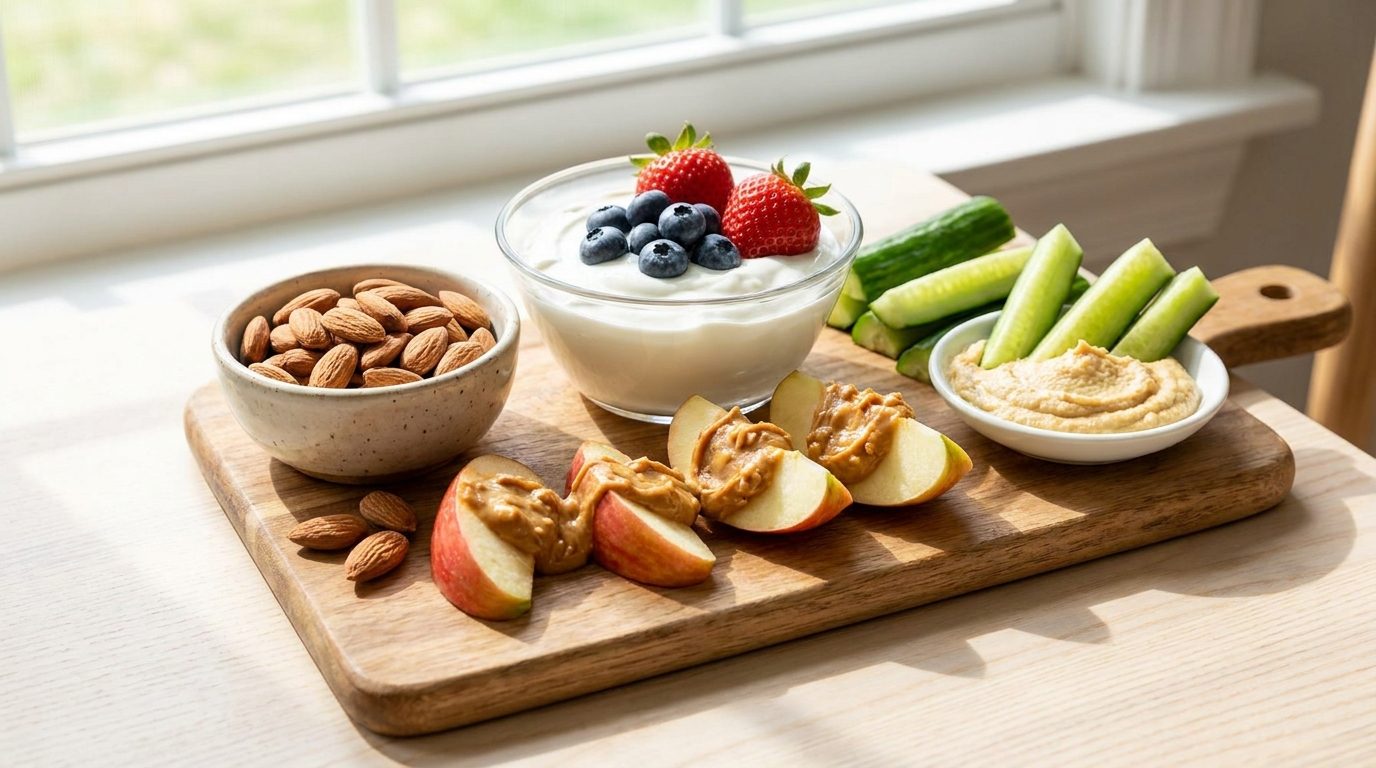
- A small handful of nuts — almonds, walnuts, pistachios: protein, fat, crunch, near-zero glucose impact
- Greek yogurt (plain) with berries — protein plus fiber-rich fruit
- Vegetables with hummus — carrots, cucumber, peppers dipped in fiber and protein
- Hard-boiled eggs — portable pure protein
- Apple slices with peanut butter — the fat slows the fruit’s sugars
- Cheese with whole-grain crackers — watch cracker portions
- Cottage cheese — high protein, add cherry tomatoes or berries
- Edamame — fiber and plant protein in one
- Avocado on whole-grain toast (half slice) — fats + fiber
- Air-popped popcorn (about 3 cups) — a whole grain, if you skip heavy butter
Snacks that sabotage
- Sugary drinks and “fruit” juices — liquid sugar, no brakes
- Chips, pretzels, crackers alone — refined carbs with nothing to slow them
- Granola and cereal bars marketed as healthy — often candy in disguise; read labels
- Sweetened yogurts — check sugar per serving; plain + your own fruit wins
- “Sugar-free” cookies and candies — may still be full of refined starch and calories
When to snack (and when not to)
Snacks are most useful when meals are far apart, around exercise, or to treat pre-low dips if you’re prone to them. If you snack from boredom in front of screens, portion into a bowl instead of eating from the package — and check whether your meals are filling enough (see meal planning basics).
- Pair carbs with protein or fat — never carbs alone.
- Target ~15–20 g of carbs per snack.
- Nuts, Greek yogurt, veggies + hummus and eggs are reliable staples.
- Read labels on anything marketed as “healthy” or “sugar-free”.
Frequently asked questions
Do I need a bedtime snack?
Only some people do — typically those on insulin whose numbers drop overnight. Ask your care team before adding one routinely.
Is fruit a good snack?
Whole fruit in a portioned amount, ideally paired with nuts, yogurt or cheese — yes for most people.
What about dark chocolate?
A small square of high-cocoa chocolate can fit an eating plan; it’s the portion, not the chocolate, that decides.
References
- American Diabetes Association — Food & Nutrition
- CDC — cdc.gov/diabetes: Eat Well
- NIDDK — niddk.nih.gov
Putting diabetic snacks into practice
The real value of diabetic snacks comes from steady, day-to-day consistency. Keep diabetic snacks simple: learn the essentials first, then build a routine that genuinely fits your life. If you ever feel stuck with diabetic snacks, small adjustments usually beat big changes — and your care team can tailor diabetic snacks to your personal needs.
Diabetic Snacks: The Bottom Line
The best outcomes rarely come from dramatic overhauls — they come from small, consistent habits you can actually keep. Start by understanding what your key numbers mean, then agree on realistic targets that fit your daily life together with your care team. Keep a simple record of what you eat, how you move and how you feel, so patterns become clear and you can repeat what works. Prepare for the tricky moments in advance, and give yourself credit for steady progress rather than perfection. Above all, if something feels off or you are unsure, do not guess — reach out to a qualified healthcare professional. With reliable information and a routine that suits you, staying in control becomes far more manageable.
Helpful links
Medical disclaimer: This article is for general education and is not a substitute for professional medical or dietary advice.